

The El Paso Star on the Mountain: History of the Franklin Mountains Landmark
First lit as a small holiday display in 1940, the glowing star above El Paso grew into one of the most beloved symbols in Texas.
High on the southern slope of the Franklin Mountains, a five-point star glows over El Paso every night — and it has been shining, in one form or another, since 1940. The Star on the Mountain is one of the signature things to do in El Paso, and its story is pure Sun City: a holiday experiment a whole border city refused to let go dark.
A Small Star for Christmas, 1940
El Paso Electric built the first star in 1940 as a Christmas decoration — a reminder to people on both sides of the Mexico–United States border that America was at peace that holiday season. It was switched on on November 29, 1940, at 6:10 p.m. — a modest outline just 50 feet wide, lit with blue lamps, barely visible from the highway below.
The little star did not last long — a storm blew out most of its bulbs. El Paso rebuilt it bigger. A second star followed at 403 feet long and 300 feet wide with 300 lights, and in 1941 crews added 50 more bulbs to fill in the dim spots.
Growing Into the Star El Paso Knows Today
After another storm destroyed it, the star was reconstructed in December 1946 at the dimensions it still holds today: 459 feet long and 278 feet wide, built from 459 bulbs. The bulbs sit on poles 12 to 15 feet tall, staggered up the slope at a 30-degree angle about 300 feet above Scenic Drive, so the star reads perfectly from below. On a clear night it can be seen from the ground up to 30 miles away — and from the air, up to 100 miles.
When the Star Shines for Something Bigger
For its first five decades, the star mostly shone for the holidays — with two unforgettable exceptions. Beginning in 1979, it stayed lit for 444 nights in support of the American hostages held in Iran, going dark only when they came home. A decade later it burned through the Gulf War, from December 1990 until August 21, 1991 — the day the last Fort Bliss soldier returned home.
In November 1993, a joint project of the Greater El Paso Chamber of Commerce and El Paso Electric made the star a nightly fixture, and the Chamber's Starlighter program now lets residents dedicate a lighting to a loved one, a cause, or a celebration. The star has flashed 23 times in memory of the victims of the August 3, 2019 tragedy — a tribute repeated each year —
A 2023 Glow-Up for a Modern Landmark
In late 2023, the El Paso Chamber completed a major renovation, replacing the old bulbs with energy-efficient, shatterproof LED modules, individually computer-controlled and able to display a full spectrum of colors. The silhouette is unchanged — just brighter, tougher, and ready for the next generation of dedications.
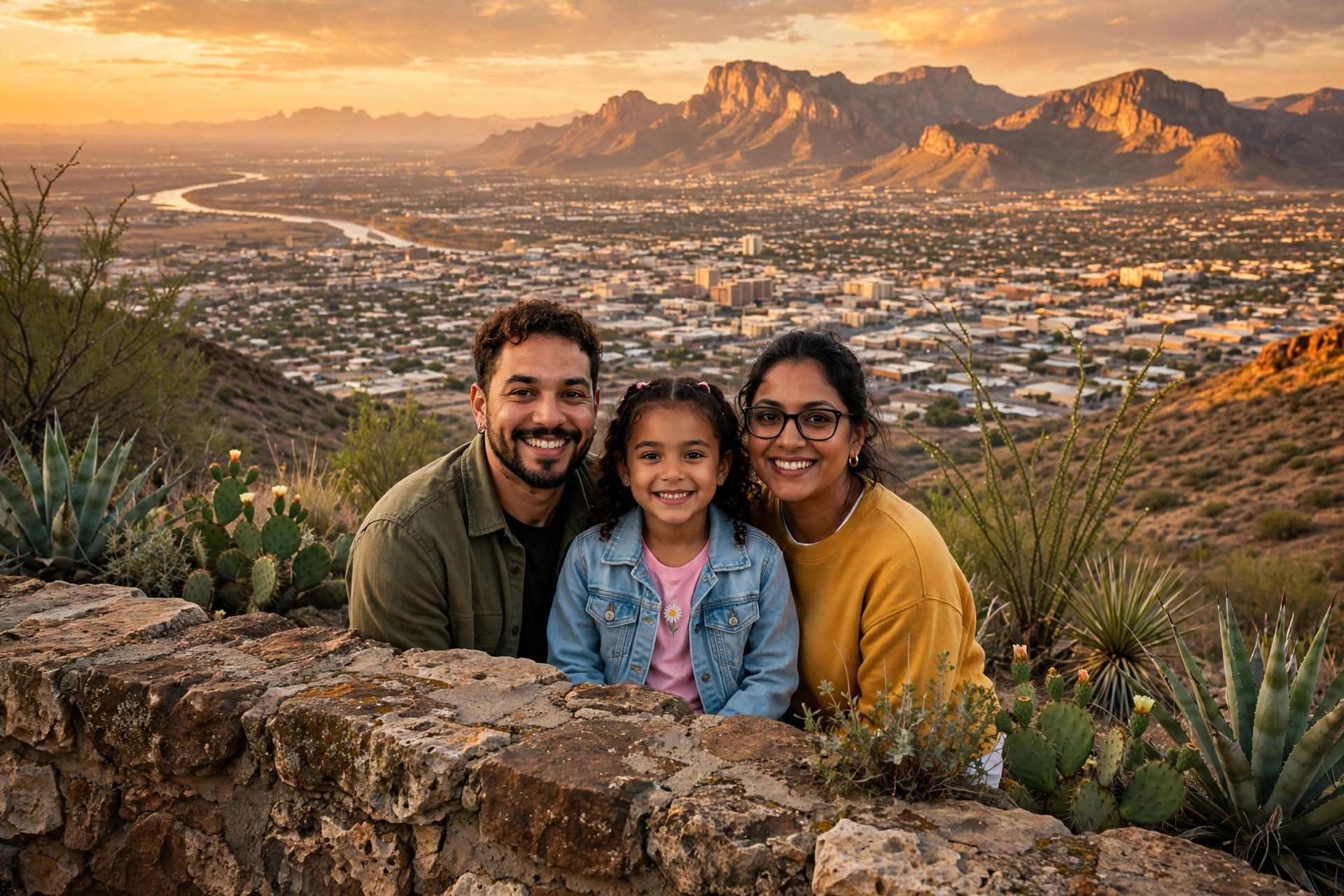
Best way to see it: Head to the Scenic Drive overlook at dusk — sunset over the Rio Grande valley, city lights switching on below, and then the star flaring to life on the mountainside above you.
Local Tip: Starlight at Night, Red Sands by Day
Here is how locals build a perfect El Paso day around the star: spend the daylight in the red dunes, then finish with the star at dusk. Take the wheel of our brand-new Can-Am Maverick X3 with Rent a UTV El Paso across 14,000 acres of beautiful sand dunes, winding serpentine trails and rugged rocky landscapes at Red Sands. An expert pace-rider runs out front in a separate vehicle like a rally co-pilot, clearing the way so you focus 100% on the drive. Helmets (with eye protection) and fuel are included — check the booking calendar for current pricing and availability.
Red Sands note: Red Sands is not an official OHV park — it is a mix of private and public lands, mostly private — so respect no-trespassing signs and stay on established routes. Riding with us, our crew knows exactly where to go.
El Paso Star FAQ
- When was the El Paso star first lit?
- November 29, 1940, at 6:10 p.m. The original star, built by the El Paso Electric Company as a Christmas display, was only 50 feet wide.
- How big is the Star on the Mountain?
- Today's star is 459 feet long and 278 feet wide, set into the slope at a 30-degree angle above Scenic Drive, and visible from up to 100 miles away by air.
- Is the El Paso star lit every night?
- Yes. Since November 1993 the star has shone nightly, and through the El Paso Chamber's Starlighter program a lighting can be dedicated to a person, cause, or celebration.
- Where is the best place to see the El Paso star?
- The Scenic Drive overlook is the classic spot — the star sits just above it. It is also visible from across the city and along Interstate 10 after dark.
The Light That Means Home
Pilots use it to find El Paso, and soldiers look for it coming back to Fort Bliss. Of all the things to do in El Paso, the simplest might be the best: park at Scenic Drive at dusk and watch the star come on. Then make the day complete with an exhilarating Red Sands UTV tour under that same desert sky.