

Beneath the Dunes: The Ancient Seas and Fossils of Red Sands, El Paso
Ancient seas, shifting dunes, Ice Age giants and the fossils hiding in the El Paso desert.
When you're ripping across the dunes at Red Sands on a UTV tour, it's easy to think only about the ride. But the ground beneath your tires has a story hundreds of millions of years in the making — ancient seas, vanished lakes, and Ice Age giants whose bones still turn up in the El Paso desert today.
Here's the deep history of Red Sands, and the fossils hiding out here.
Heads up: Red Sands is not an official OHV park and isn't managed or maintained by any agency. It's a mix of private and public lands — most of it privately owned — that locals have ridden for decades. Always respect no-trespassing signs, stay on established routes, and leave fossils where you find them. Our guides are specifically trained to avoid restricted and private areas, so when you ride with Rent a UTV El Paso, you can focus on the adventure knowing you're exactly where you're supposed to be.
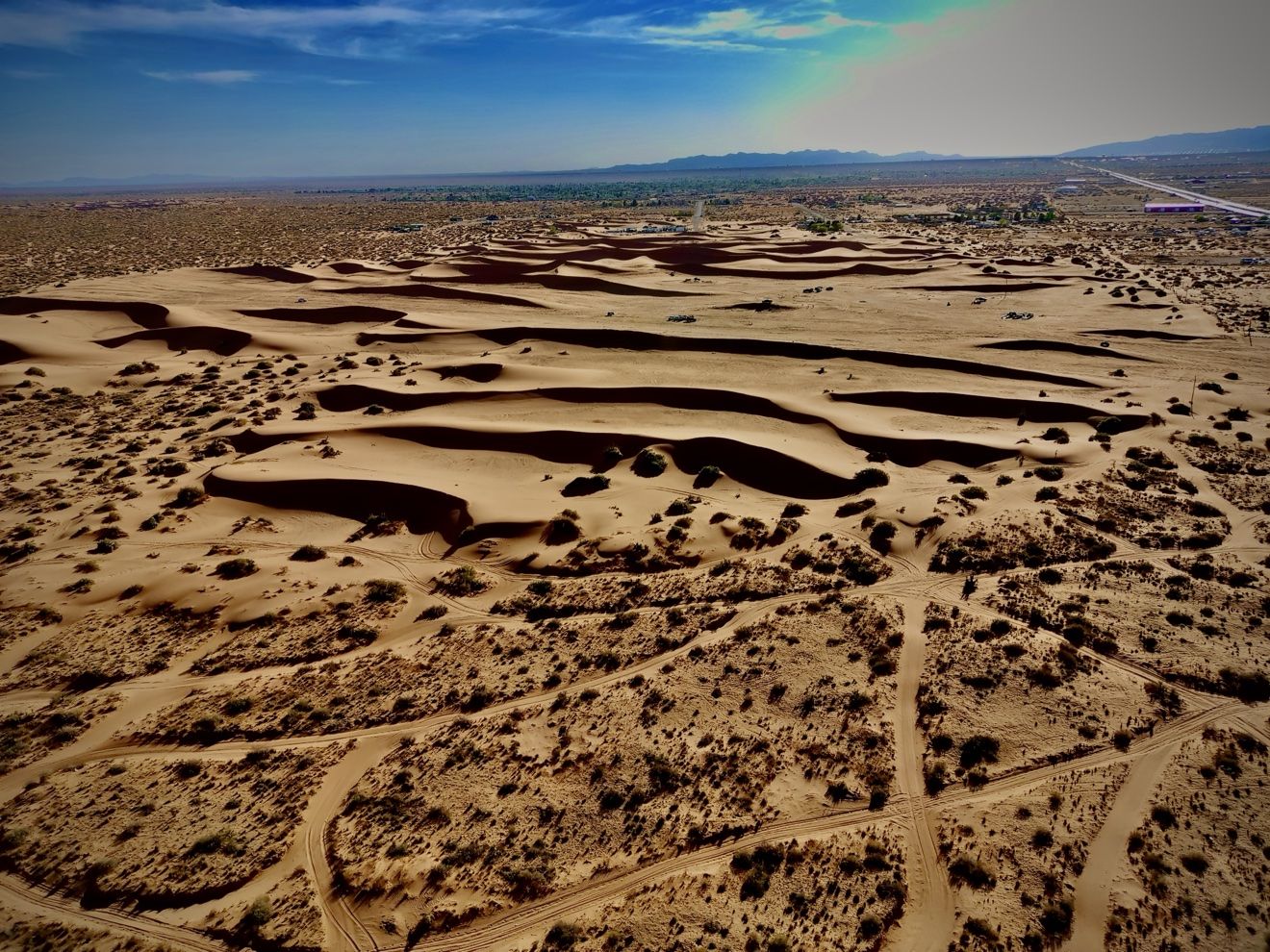
When Texas Was Underwater
It sounds impossible standing in the Chihuahuan Desert, but West Texas spent much of its history beneath the sea. Around 265 million years ago, during the Permian period, a vast tropical sea covered the region. The Guadalupe Mountains east of El Paso are actually the fossilized remains of a massive ancient reef — one of the best-preserved fossil reefs on Earth.
The limestone ranges around El Paso, including the Franklin and Hueco Mountains, hold marine fossils from even earlier: trilobites, brachiopods, ancient sponges, and other sea life from roughly 450 million years ago, when this land sat near the equator under a shallow ocean.
Every time you see a seashell-shaped fossil in West Texas rock, you're holding proof that the desert was once an ocean floor.
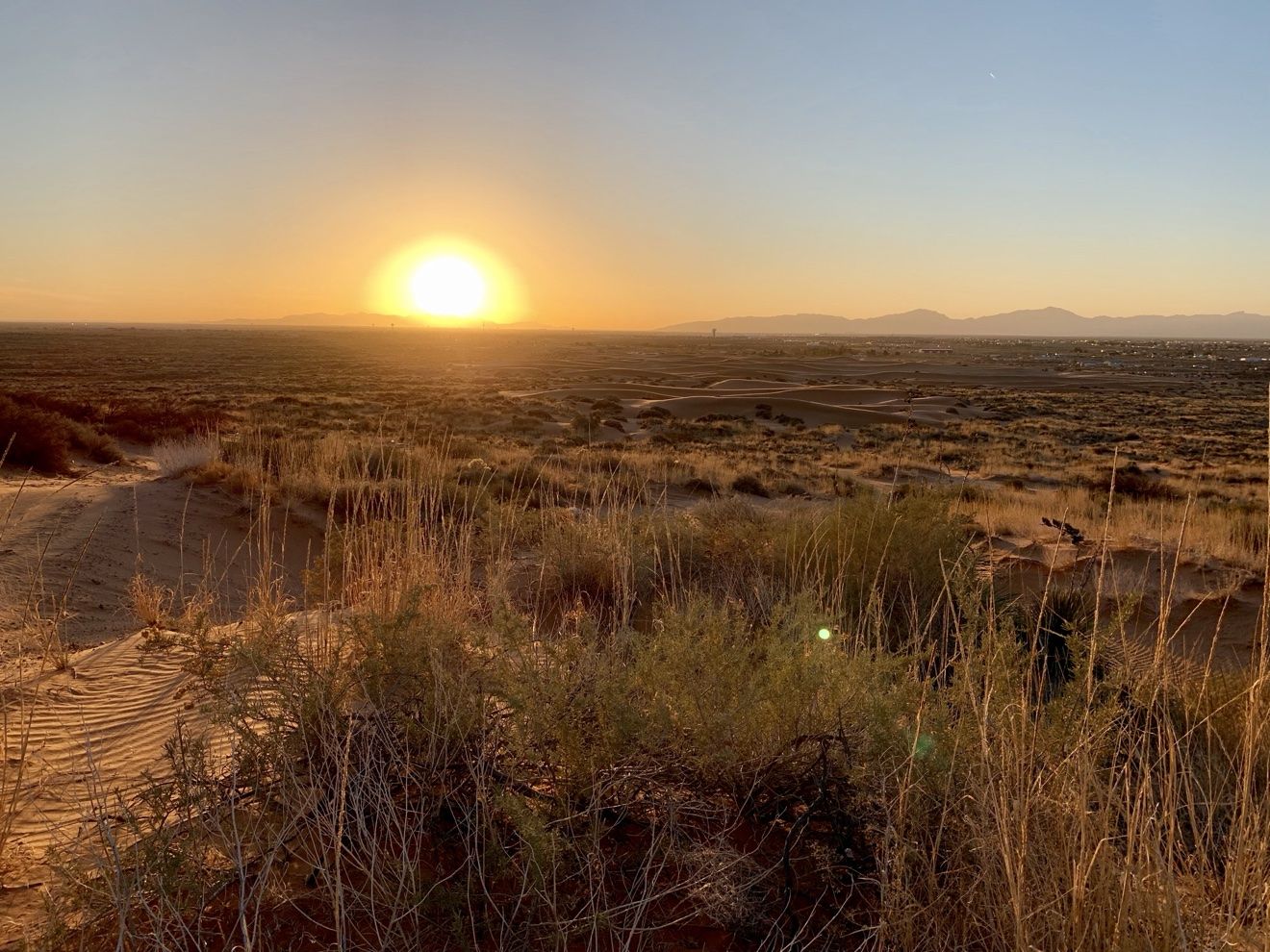
The Red Sand Itself: Wind, Iron, and Time
So where did the red dunes come from? The sand at Red Sands is wind-deposited — carried grain by grain by desert winds over thousands of years and piled into the dune fields you see today. The signature red color comes from iron oxide coating the sand grains — essentially the same chemistry as rust, painted across the landscape.
The dunes are always moving, always reshaping. That's part of what makes riding here so good: the terrain never looks exactly the same twice.
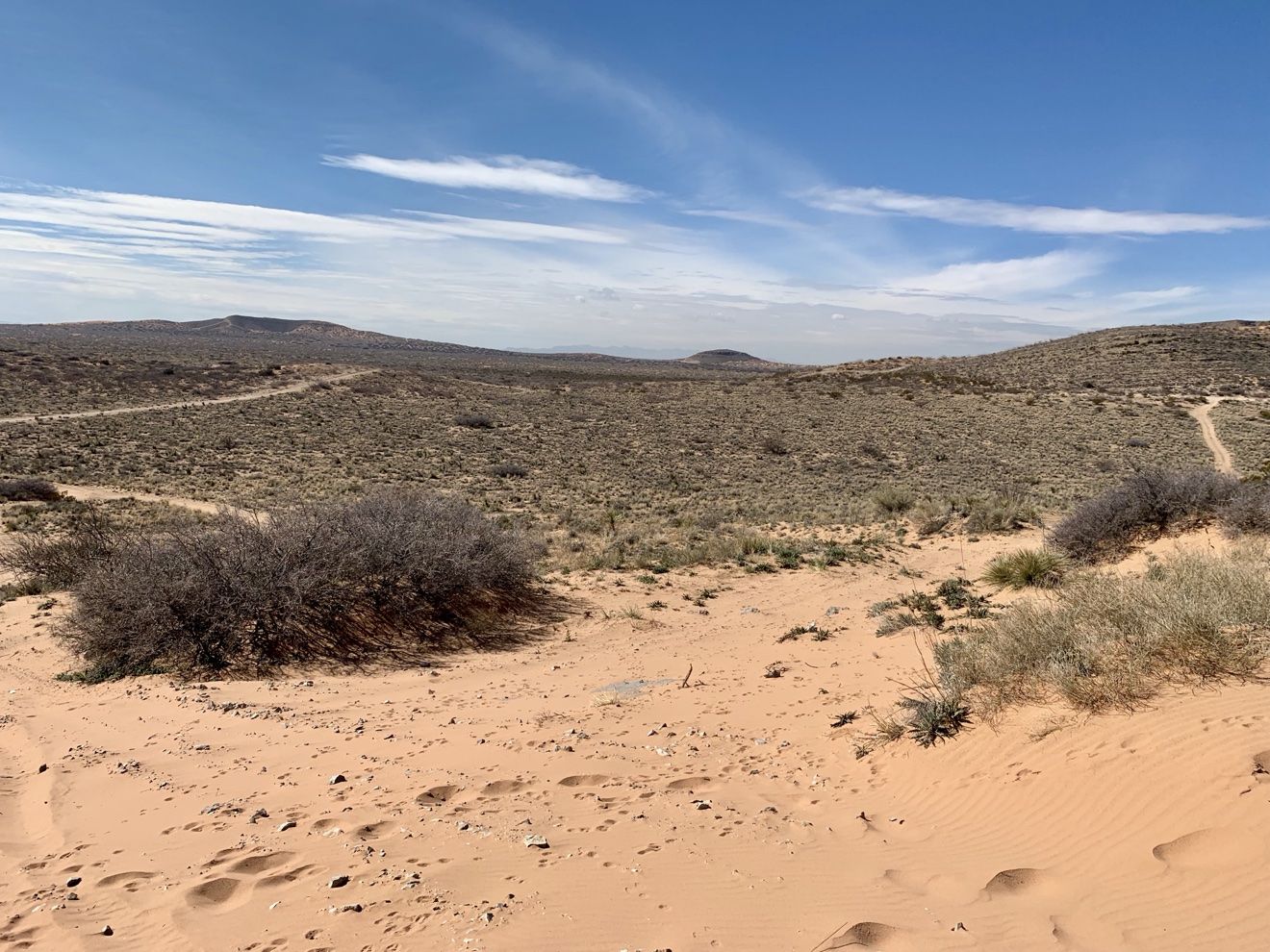
Ice Age Giants of the El Paso Desert
Here's where it gets wild. Long after the seas drained away, the El Paso region was home to some of the most spectacular Ice Age animals in North America.
Research from UTEP's own paleontologists documents what roamed here during the Plio-Pleistocene — roughly the last few million years:
- Mammoths and mastodons — elephant-like proboscideans, including gomphotheres with complex folded teeth
- Ancient camels and horses — now extinct in North America
- Giant ground sloths — slow-moving behemoths the size of cars
- Glyptodonts — armored, armadillo-like tanks
- Tapirs and pronghorns
Most of these fossils come from ancient lake and river sediments — the sands and gravels of old river channels. The Rio Grande's entrenchment through the valley exposed layer upon layer of these deposits, which is why the El Paso area is so rich in finds.
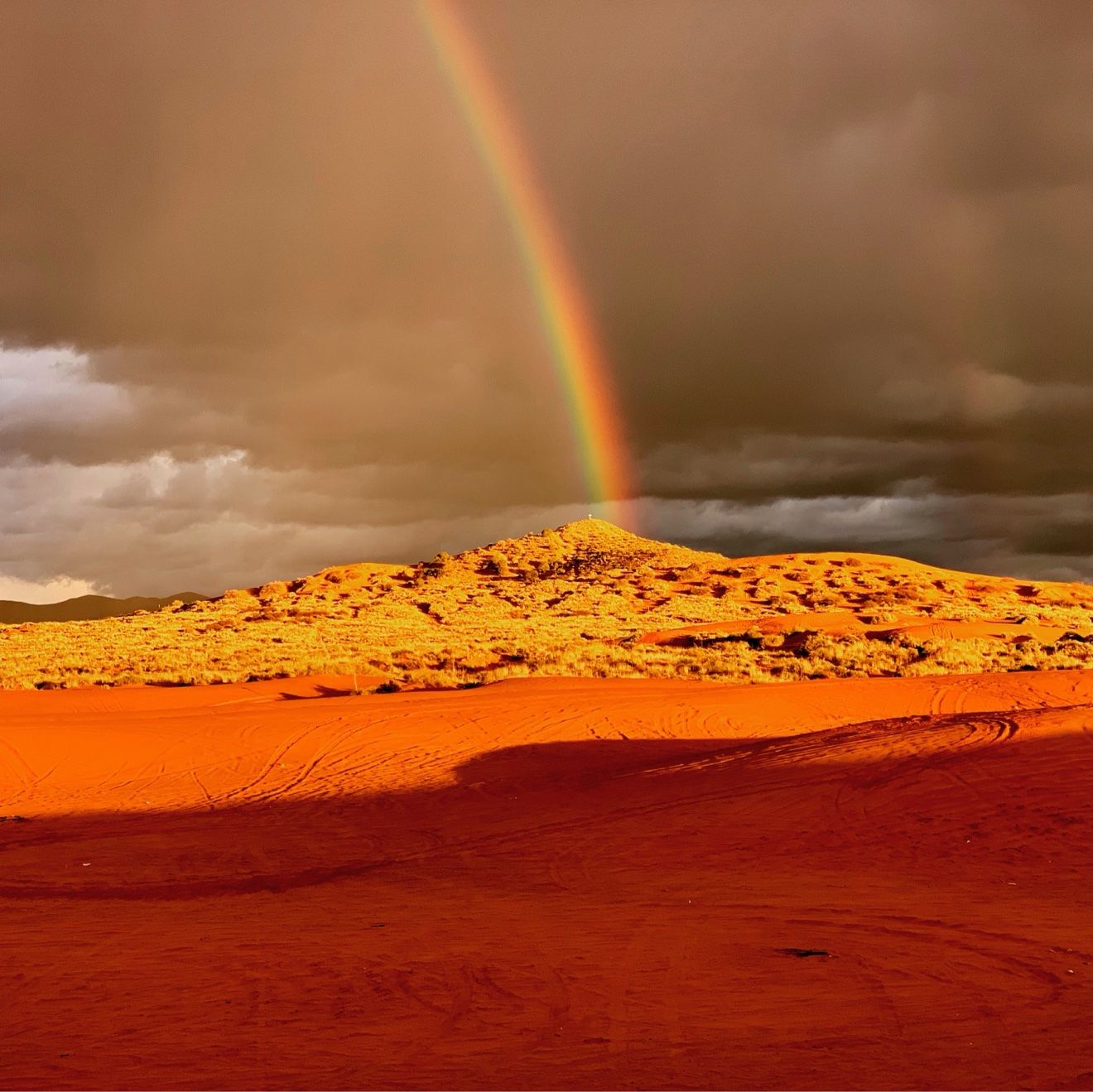
Dinosaurs in the El Paso Region
It gets even better. UTEP geologists have confirmed dinosaur fossils in the El Paso region — including bones from Tenontosaurus, a four-legged herbivore, recovered from the Indio Mountains area. Fossilized bones are rare in West Texas because dry desert conditions make preservation difficult, which makes every local discovery a big deal.
Fossils You Can Still Find at Red Sands
Visitors to Red Sands regularly spot fossil fragments weathering out of the sand — pieces of ancient marine life, mineralized bone fragments, and shells from the days when water covered this land. Keep your eyes on the ground between rides; the desert gives up its secrets to people who look closely.
A few ground rules for fossil spotting:
- Look, photograph, and leave. Fossils are part of the area's natural heritage — take photos, not specimens.
- Know the law. Vertebrate fossil collection is restricted or illegal on many public lands. When in doubt, leave it in place.
- Report cool finds. If you spot something remarkable, local museums and universities (like UTEP's Biodiversity Collections) want to know.
Experience the Geology Firsthand
Reading about ancient seas is one thing. Riding across the dunes they left behind is another.
A guided UTV tour with Rent a UTV El Paso takes you straight through the heart of Red Sands — 25 miles of trail across the same red sands that buried Ice Age riverbeds and entombed prehistoric seas. Your guide knows this terrain inside and out, and the photo stops alone are worth the trip.
Next time you're out in the dunes, take a second between the thrills to look down. You're driving across hundreds of millions of years of Earth history — and that's a story worth telling.